Treatment · Implants
Dental implants in Matamoros, Mexico
A dental implant is a small post, usually titanium, placed in the jawbone to replace the root of a missing tooth. A crown, bridge or denture is then attached to it. Before recommending one, we evaluate your bone, your gums and your overall health.
When it may be an option
- You are missing one or more teeth.
- You wear a removable denture that moves or feels uncomfortable.
- A tooth cannot be saved and needs to be extracted.
- A gap is causing neighboring teeth to shift.
Treatment options
Single implant
One implant with a crown to replace a single tooth, without reshaping the teeth next to it.
Implant-supported bridge
Two or more implants hold a bridge that replaces several teeth in a row.
Full-arch restoration on implants
A fixed or removable full arch supported by several implants, when all teeth in an arch are missing.
Additional procedures
If there isn't enough bone, a bone graft or another preliminary procedure may be needed. This is decided at your evaluation.
How the process works
The number of visits and total time depend on your case. If you're coming from the U.S., we plan the dates from the start so you can organize your trips.
- 1
Evaluation and records
Clinical exam, X-rays and, when your case needs it, a CT scan.
- 2
Planning
The implant position is planned with the final restoration in mind from day one.
- 3
Implant placement
A surgical procedure under local anesthesia.
- 4
Healing
The bone bonds with the implant. This usually takes several months and varies from person to person.
- 5
Final restoration
The crown, bridge or denture is designed and made with HG Dental Lab, then fitted at the clinic.
- 6
Follow-up
Regular checkups and professional cleanings to care for the implant and gums.
Possible benefits
- A fixed replacement that doesn't require reshaping neighboring teeth.
- Helps preserve the bone where the tooth is missing.
- Can improve chewing and the stability of a denture.
- A natural look when the restoration is planned and made to measure.
Limitations and considerations
- It requires surgery and a healing period.
- Not everyone is a candidate without prior treatment: low bone volume, gum disease, some medical conditions and smoking can increase risks.
- It needs good hygiene and lifelong checkups.
- Like any surgery, it carries risks your specialist explains before starting.
Who treats you

Clinical director
Dr. Hugo Contreras
Clinical director · Restorative and cosmetic dentistry
Cases for this treatment
Each case shows the goal and the procedure. Photos are not digitally altered. Results depend on each patient.
Photos inside the mouth, before and with the finished restoration.
Featured case
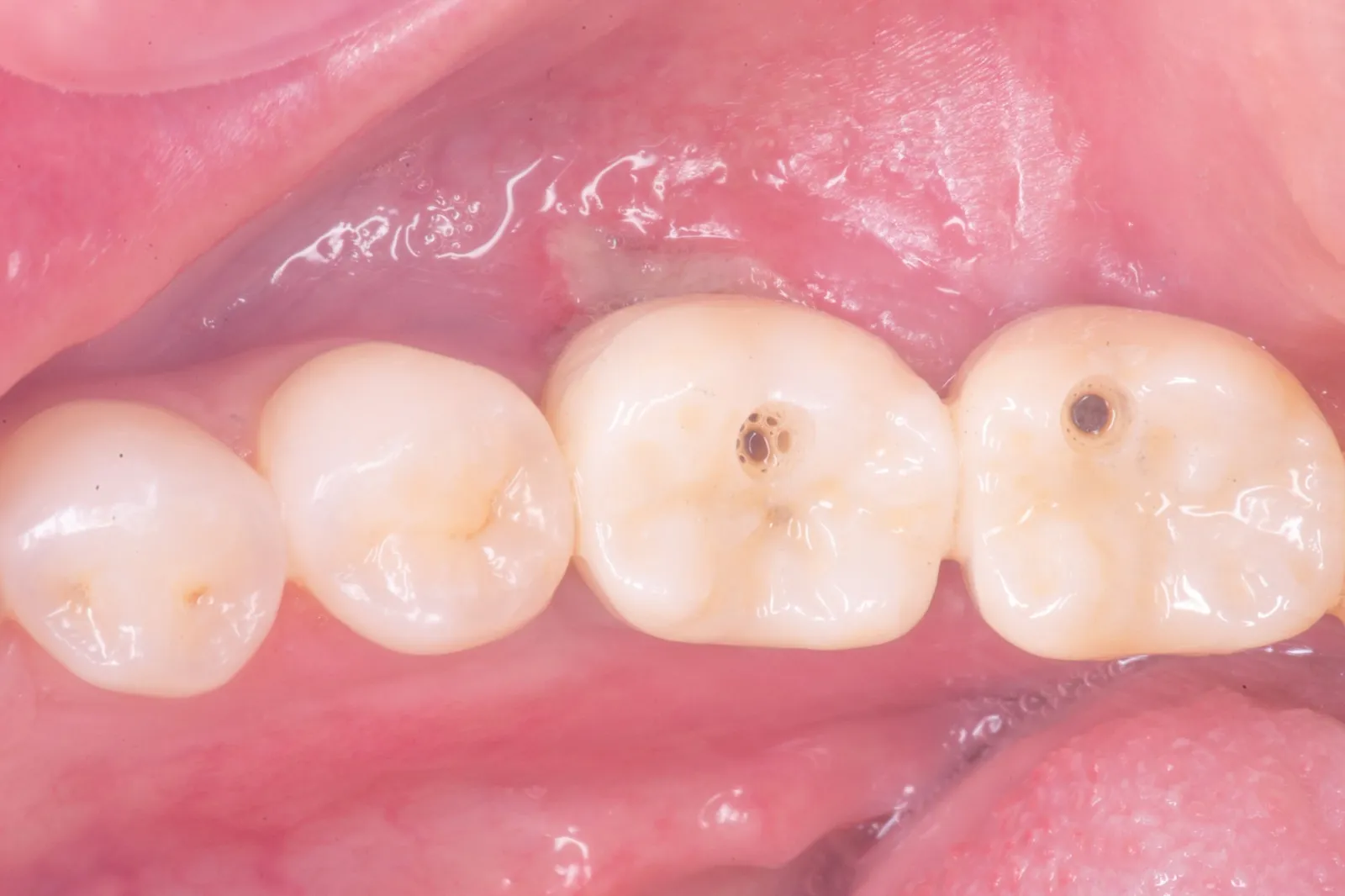
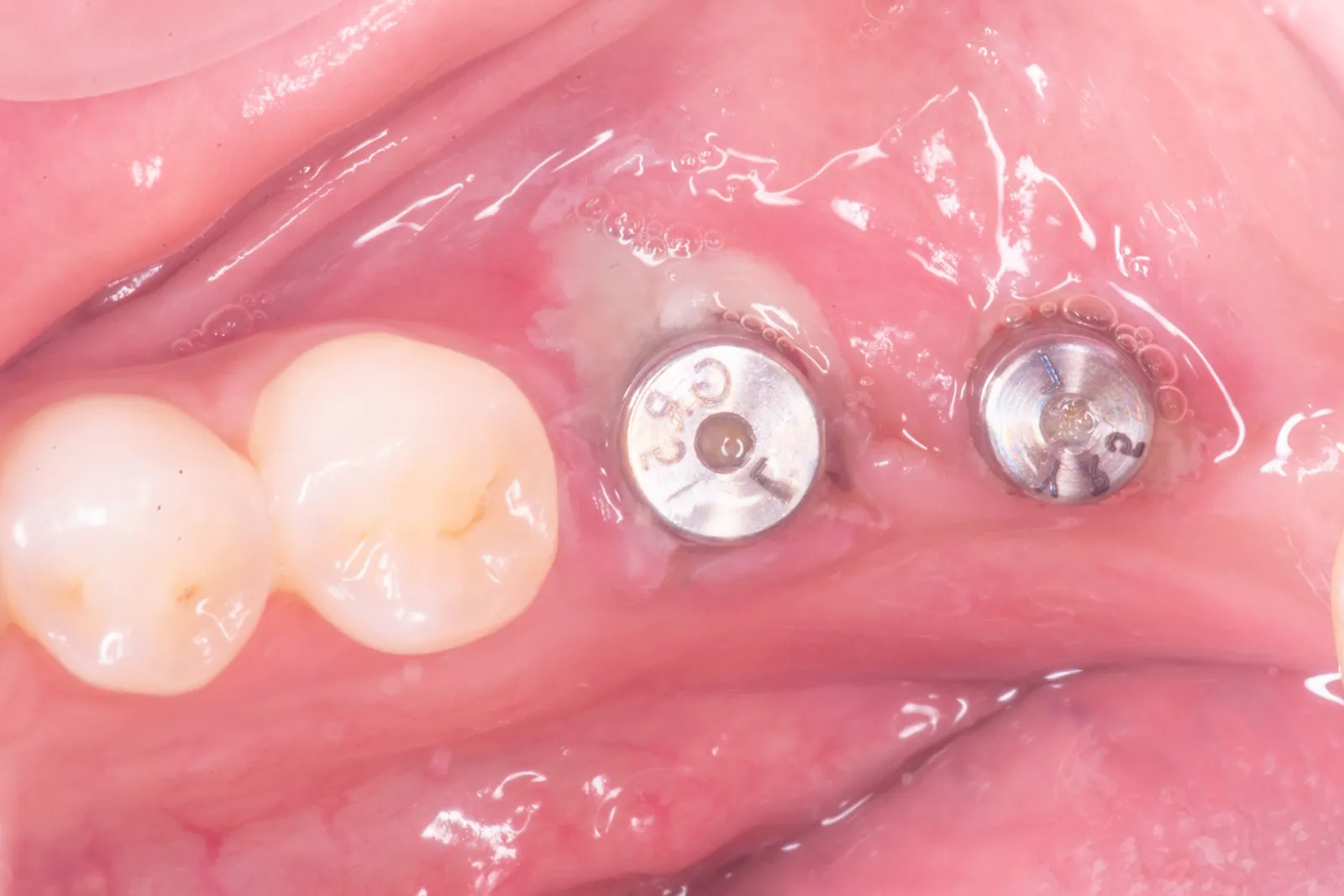
Two implants with screw-retained crowns
Implants healing → Crowns in place
Replace two missing back teeth.
See details
Procedure: Two implants and, after healing, two screw-retained crowns on them.
These are screw-retained crowns: in the photo the screw access hole is still open. Once finished, it is sealed with tooth-colored resin, so it does not stay like this in the mouth. Thanks to the screw, if they ever need to be checked, they can be removed and put back without damaging them.
 BeforeAfter
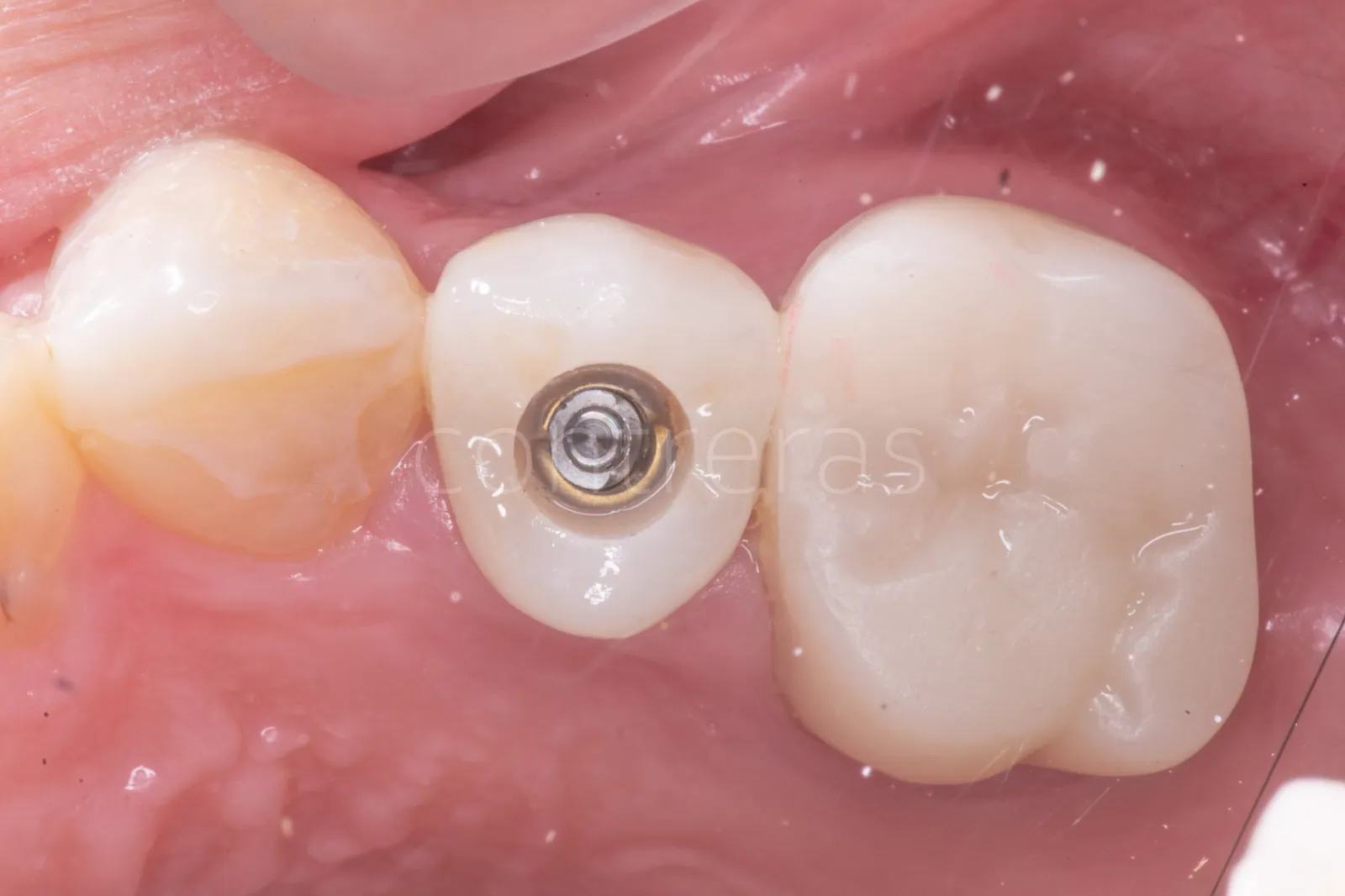
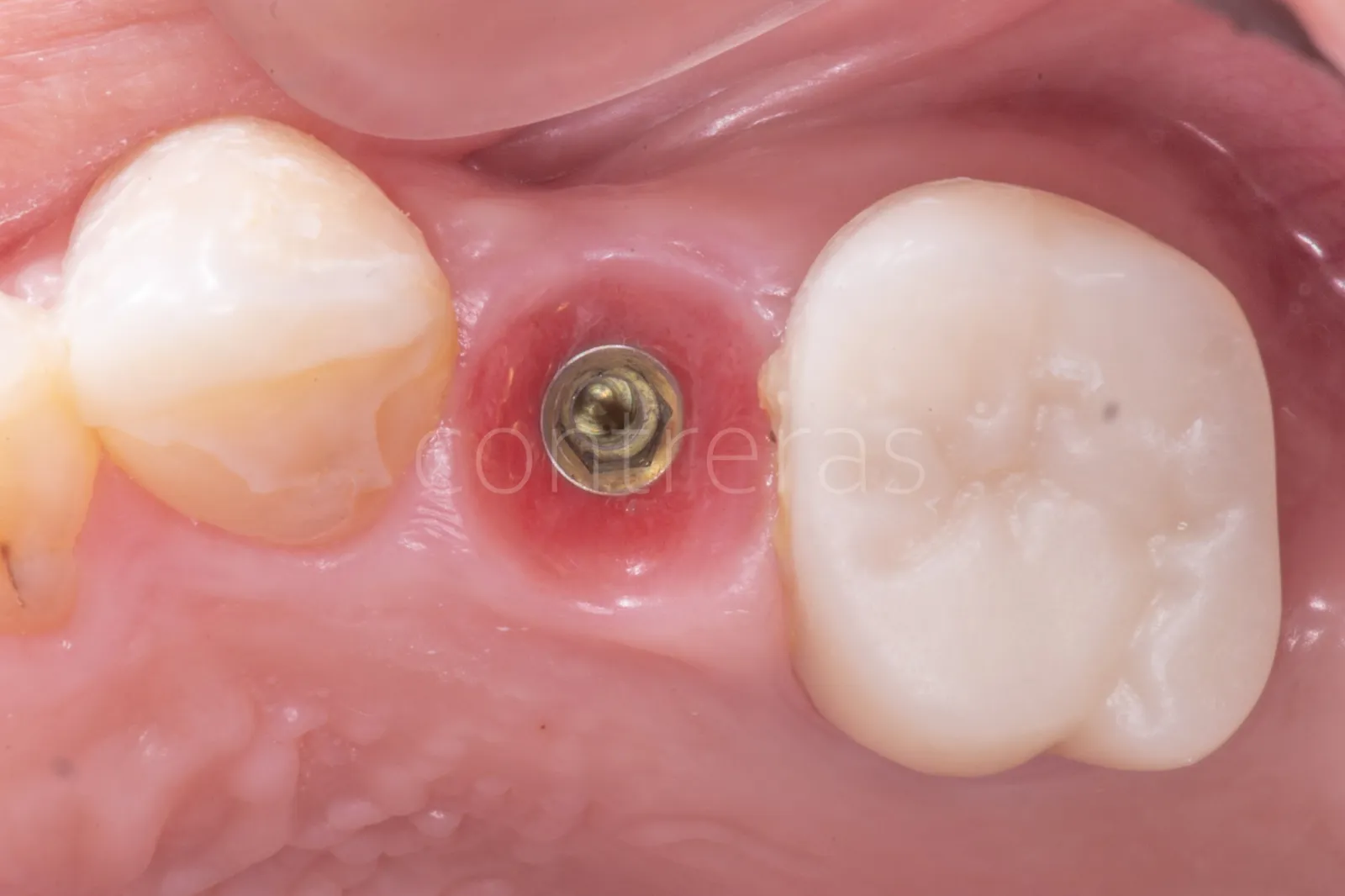
A single implant with a screw-retained crown
Gum shaped around the implant → Crown in place
I'd like an evaluation like thisSee details
Goal: Replace one missing tooth between two others.
Procedure: One implant, shaping of the gum and a screw-retained crown.
These are screw-retained crowns: in the photo the screw access hole is still open. Once finished, it is sealed with tooth-colored resin, so it does not stay like this in the mouth. Thanks to the screw, if they ever need to be checked, they can be removed and put back without damaging them.
Dental implant FAQs
Does getting an implant hurt?
The procedure is done under local anesthesia. Afterwards there may be some discomfort and swelling, managed with your specialist's instructions.
Am I a candidate for implants?
Only an evaluation and diagnostic records can tell. If you're not a candidate today, there may be preliminary treatments or alternatives such as bridges or dentures.
How many visits will I need if I'm coming from Texas?
Usually several visits spaced weeks or months apart, because of healing time. We give you an estimated schedule after your evaluation.
How long does an implant last?
With good hygiene and checkups, an implant can last many years. How long depends on your health, habits and care; there is no lifetime guarantee.
How much does it cost?
It depends on how many implants you need, whether preliminary procedures are required and the type of restoration. We explain the full cost after your evaluation.
Request your evaluation
We'll contact you to confirm the date, location and what to bring.
Where we are
Av. Álvaro Obregón 29, entre Claveles y Gardenias, Col. Jardín
Heroica Matamoros, Tamaulipas, México
- Monday to Friday: 9:00 a.m.–12:00 p.m. and 3:00–6:00 p.m.
- Saturday: 9:00 a.m.–3:00 p.m., no midday break
- Sunday: closed
General information only. It does not replace a clinical evaluation. Every plan is defined after reviewing your case, and results vary from patient to patient.